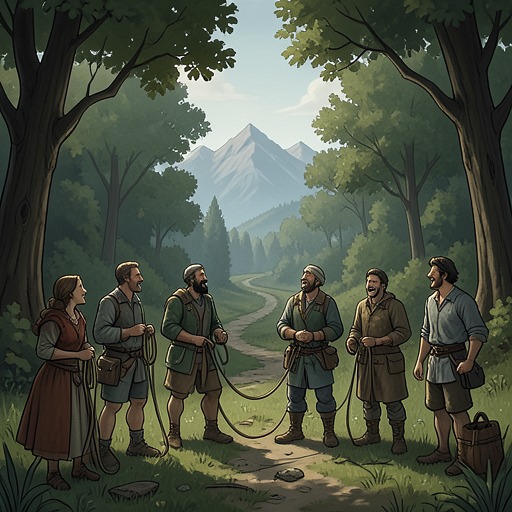
Helen and Duncan lead the bar mitzvah dance
Happiness for BeginnersHelen and Duncan lead the bar mitzvah dance after an empty dance floor exposes the divide between the seventh graders and the elderly guests. What begins as an embarrassing party becomes a moment of shared play: Helen acts despite her shyness, Duncan joins her, and their improvised instructions draw nearly everyone onto the floor.
An Empty Floor and a Familiar Friend
The room is filled with seventh graders and older people, dressed carefully in suits and dresses; the boys wear clip-on ties, and some girls have patent-leather Mary Janes. Yet the formality does not bridge the generations. The children occupy one side of the room and the older guests the other, while the disco ball turns above an empty dance floor. Helen describes the two groups as looking zipped into their bodies like Halloween costumes, an image that captures both the awkwardness of the occasion and the self-consciousness of its guests. The lights and music cannot by themselves make the party feel like a party.
Helen proposes that Darcy, whom she remembers as a great dancer, might motivate the guests. Darcy refuses because she is the mother: she fears that her dancing would mortify her child. Her response makes the problem more complicated than simple reluctance to dance. The adult who might have broken the ice sees her parental role as a reason to stay off the floor, leaving the room without an obvious leader.
From Reluctance to First Step
The possibility of getting the party moving brings back Helen and Darcy’s own history. Darcy recalls the dance parties they held in tenth grade in the attic playroom, where they turned up the music and danced despite the prospect of Darcy’s father banging on the floor with his nine iron. For Helen, the memory contrasts with the present: the ease she once shared with a friend now has to be recovered in a room full of strangers. She acknowledges that she can dance when she is relaxed and among friends, but that shyness is closing in on her.
Money enters the exchange without resolving Helen’s discomfort. Dave says the fee is three hundred dollars; Darcy offers to double it and pleads for help, calling the event the worst bar mitzvah ever and saying it needs saving. Helen does not simply respond to the offer as a hired entertainer. She recalls having fantasized for years about revenge for an earlier prom-night debacle involving Dave and Darcy, imagining them on a sinking cruise ship while she tried and failed to reach them. In the present, however, she recognizes that she could leave and go home, yet chooses not to. Her realization is simpler than revenge: she loves dancing, and if she could dance with people named Caveman and Caboose to nothing but sticks and stones, she could dance here too.
Helen gives in with a shrug and walks alone into the empty middle of the floor. She begins a dance without having heard its music, beckoning the children and grandparents to join her. No one comes at first. Duncan then arrives with a wireless microphone, changing her solitary gesture into a possible performance for the room. Helen addresses the guests as Big Sister and introduces Duncan as her partner; he supplies the name Bilbo Baggins. Their playful introductions give them temporary authority without making the moment solemn.
Teaching the Room to Dance
Helen begins with instructions simple enough for anyone to follow: step right when the song says to the right, step left when it says to the left, and kick when it says kick. The children initially stare blankly, so she repeats the prompt into the microphone. A grandmother responds with a thumbs-up, a small sign of encouragement before the room as a whole has joined in.
Helen starts dancing, and Duncan joins her. They ask the DJ to play the song three more times; by the end, almost everybody has the hang of it. The children begin to relax, and Helen describes the group as having crossed the terror threshold. The phrase marks a change for both sides of the exchange: the children are less afraid of looking foolish, and Helen has acted through the shyness that had been holding her back.
Once the first dance has given the guests a shared rhythm, Helen changes the song and introduces a Step-Clap, explaining that dancers step sideways and clap as their feet come together. She presents it as a building block, then adds a Spin, a Wiggle, a Booty-Shake, a John Travolta, a Figure Eight, and an Ooch. Helen makes these moves up on the spot. Duncan contributes his own sequence—the Umbrella, Bullet-Train, Honky Tonk, Marilyn Monroe, Slip-N-Slide, Do-Nut, Banana Peel, and Talk to the Hand—and the two take turns demonstrating them. The dance becomes less a test of skill than a game whose rules they can invent together.
A Shared Dance Floor
The guests accept Helen and Duncan as party motivators, and the change reaches beyond the children: soon the grandparents are dancing too. Grandma GiGi appears among them in a red pantsuit. When Helen asks what she is doing there, Grandma GiGi answers that she was invited, with a plus-one, without losing the beat. Her arrival brings the event to a warm close in motion rather than in a formal announcement.
The episode turns on the difference between waiting for someone else to make the party work and stepping into the awkwardness first. Helen begins alone, with no guarantee that anyone will follow; Duncan’s support, the repeated song, and their improvised moves gradually make participation easier for the room. The result is not that every guest becomes a confident dancer, but that the opposing sides of the room share a floor. For Helen, the rescue also reconnects a present act of courage with the joy of dancing she remembers from adolescence.